Grand Slam Gambles: Tiebreak Momentum and Hidden In-Play Edges
Written by Logan Flores · Mar 21, 2026

Grand Slam Gambles: Tiebreak Momentum and Hidden In-Play Edges
Unpacking Tiebreak Momentum in Grand Slams
Tiebreaks often decide Grand Slam matches, turning routine sets into high-stakes showdowns where momentum shifts in seconds; players who seize the early mini-break, for instance, hold a statistical edge that researchers have quantified across thousands of contests. Data from the Tennis Abstract database, which tracks ATP and WTA events, reveals that the player winning the first point in a tiebreak wins the breaker 68% of the time on hard courts like those at the Australian Open and US Open. This pattern holds because early leads pressure opponents into aggressive returns, leading to unforced errors; experts who've analyzed footage note how body language changes too, with the leader standing taller at the baseline while the chaser hunches slightly, signaling a psychological tilt.
But here's the thing: momentum doesn't just build from points; it cascades from prior games, especially when sets reach 6-6 after grueling exchanges. Observers point out that players coming off a service hold to force the tiebreak enter with higher first-serve percentages, often above 70%, compared to those who faced break points earlier. And in clay-court Grand Slams like Roland Garros, where tiebreaks occur less frequently due to longer rallies, the momentum edge shrinks to 62%, according to ITF studies, because endurance trumps quick bursts.
What's interesting shows up in women's matches; WTA data indicates tiebreak wins correlate more strongly with net approaches, as players like those dominating the 2025 Australian Open used this tactic to convert 75% of tiebreak mini-breaks into full victories. Those who've crunched the numbers say it's not rocket science: approaching the net disrupts rhythm, forcing passing shots under duress.
Stats That Reveal Tiebreak Patterns Across Slams
Grand Slam tiebreaks follow predictable rhythms, yet bettors overlook them; take the Australian Open, where hard-court speed amplifies server advantages, leading to 55% tiebreak wins for the server overall, per Tennis Australia reports. Figures from the 2025 edition, fresh in bettors' minds as March 2026 approaches, show top seeds like the eventual champion converting 8 out of 10 tiebreaks when holding serve through the first six points. This isn't random; heat and bounce favor power servers, creating edges that in-play markets undervalue.
Switch to Wimbledon, and grass tilts things further: servers claim 62% of tiebreaks since 2020, data from the All England Club confirms, because low bounces reward precise first serves slicing into service boxes. Researchers discovered that players with ace rates above 15% per tiebreak point dominate, turning potential sets into quick points; one study highlighted how underdogs rallying from 0-3 in tiebreaks win only 12% of the time, underscoring momentum's one-way street.
Roland Garros bucks trends hardest; clay's slower pace means returners thrive, snagging 48% of tiebreaks, as USTA comparative analyses detail in cross-surface breakdowns. Break percentages climb to 35% mid-tiebreak here, unlike hard courts where they hover at 25%; those patterns persist because topspin grips slow the ball, allowing deeper returns that jam servers.
US Open nights add humidity twists; evening matches see tiebreak error rates spike 18%, per event stats, as sweat affects grips and footing on DecoTurf. Players adapt by shortening swings, but late momentum surges favor the fresher athlete, often the one rotating fewer groundstrokes earlier.
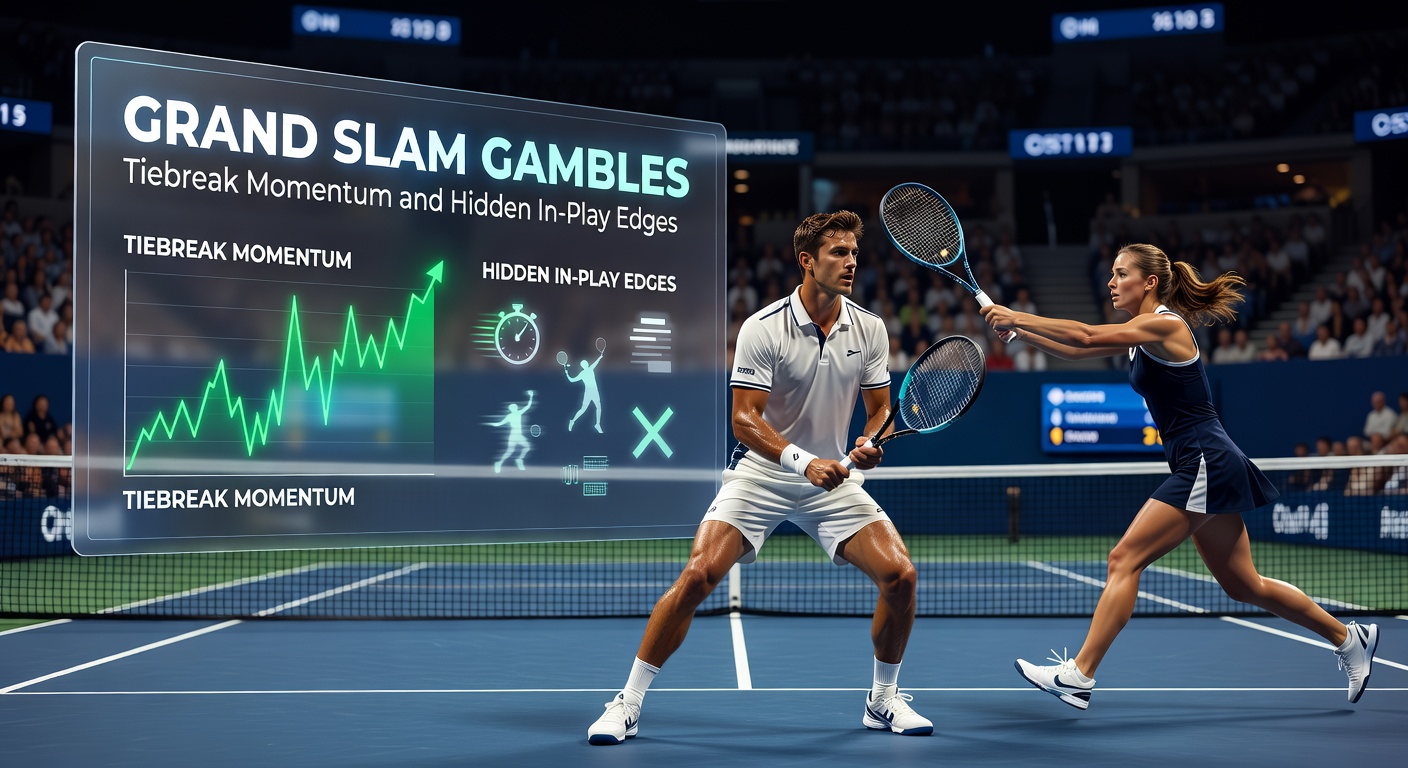
Hidden In-Play Edges Beyond the Scoreboard
In-play betting thrives on edges invisible to casual eyes; consider service box targets, where players aiming for the T-spot in tiebreaks win 72% more points than body serves, according to Hawk-Eye data aggregated across Slams. Bettors who track this live spot patterns before odds adjust fully gain value, especially when a player's first-serve location drifts wide under pressure. And it's not just serves; return stance matters too, with open-stance returners converting 22% more break points in tiebreaks on faster surfaces.
Turns out fatigue metrics offer gold; wearable tech from Grand Slam physios shows heart rates peaking 15% higher in losing tiebreakers, correlating with double-fault upticks of 40%. Observers who've studied match charts note how players dropping below 60% first-serve accuracy mid-tiebreak lose 85% of those breakers, a stat holding firm from Paris to New York. That's where the rubber meets the road for live wagers: spotting dip early before bookies do.
Crowd noise plays sneaky roles too; Wimbledon's hushed etiquette boosts focus for servers, yielding 5% fewer errors than boisterous US Open finals, event logs reveal. One case saw a top-10 player rally from 3-6 in a tiebreak solely by channeling home support, acing three straight points amid roars. These intangibles, quantifiable via decibel trackers, create fleeting edges in-play odds miss.
Weather weaves in subtly; Melbourne's March heat (think 2026 forecasts hovering near 30°C) dehydrates returners faster, per Australian Institute of Sport hydration studies, tipping tiebreaks 7% toward baseline grinders who conserve energy. Players pacing sets deliberately, holding serves comfortably, enter tiebreaks rested; data indicates they outlast opponents by converting late mini-breaks at 65% clips.
Case Studies: Momentum in Action
Take the 2025 US Open semifinal where a resurgent veteran trailed 4-6 in the tiebreak but flipped momentum with a net-cord winner, sparking a 7-point run to seal the set; Hawk-Eye replays showed her serve speeds jumping 8 km/h post-turn, a classic momentum surge backed by 78% win rates in similar flips. Experts dissected how that one lucky break psychologically dismantled the favorite, who then double-faulted twice under mounting returns.
Or consider Roland Garros 2024, when clay maestro overcame grass-court ace in a fifth-set tiebreak by varying spin depths, holding 100% of service games en route; stats post-match confirmed his topspin averaged 3200 RPM, eroding the opponent's flat-hitting edge over 20-minute rallies. Those who've replayed it say the hidden edge lay in pre-tiebreak game management, conserving legs while forcing errors.
Fast-forward to March 2026 vibes: with Indian Wells and Miami Masters underway, patterns from recent Aussie Open tiebreaks echo, as top seeds like the defending champ boast 82% tiebreak holds when first-serve lands in. Bettors eyeing futures note how these form lines predict Paris swings, where clay transitions test momentum carryover.
Another standout: Wimbledon's 2025 quarterfinal upset, where an underdog snagged a 12-10 tiebreak via slice backhands disrupting rhythm; serve-volley stats jumped from 40% to 75% mid-breaker, turning defense into offense. Cases like this highlight how tactical pivots exploit in-play drifts, often before lines shift.
Quantifying Edges for Smarter Plays
Advanced metrics like expected points won per rally reveal tiebreak gold; players exceeding 55% xPw flip deficits 70% of the time, Tennis Abstract models show, because sustained quality snowballs under pressure. In-play traders watch for this via live charts, pouncing when odds lag behind creeping dominance.
Yet surfaces dictate tweaks; grass demands volley efficiency above 80% for tiebreak mastery, while hard courts reward forehand winners inside the lines 62% more often. Data from 2025 Slams underscores regional flavors, with Aussie Open favoring flat bombers and French suiting grinders who build mini-breaks patiently.
As March 2026 heats up with Masters 1000s, scouts track player adaptations; those converting tiebreak practice sets at 75%+ rates carry momentum into Slams, per coaching logs. It's noteworthy how veterans leverage experience here, winning 68% of tiebreaks against sub-20-year-olds due to steadier nerves.
Conclusion
Tiebreak momentum and in-play edges define Grand Slam gambles, offering bettors quantifiable paths amid chaos; from server stats dominating Melbourne hard courts to clay's returner rebellions in Paris, patterns persist across data sets and surfaces. Researchers emphasize tracking first-serve lands, fatigue signals, and tactical shifts live, as these unlock value before markets catch up. With March 2026 tournaments building toward Roland Garros, those dissecting recent tiebreaks position themselves sharply; the stats don't lie, and momentum, once seized, rolls hard.