Lineup Shifts Spark Betting Opportunities in Tennis and Soccer
Written by Uma Flores · Oct 9, 2026

Lineup Shifts Spark Betting Opportunities in Tennis and Soccer
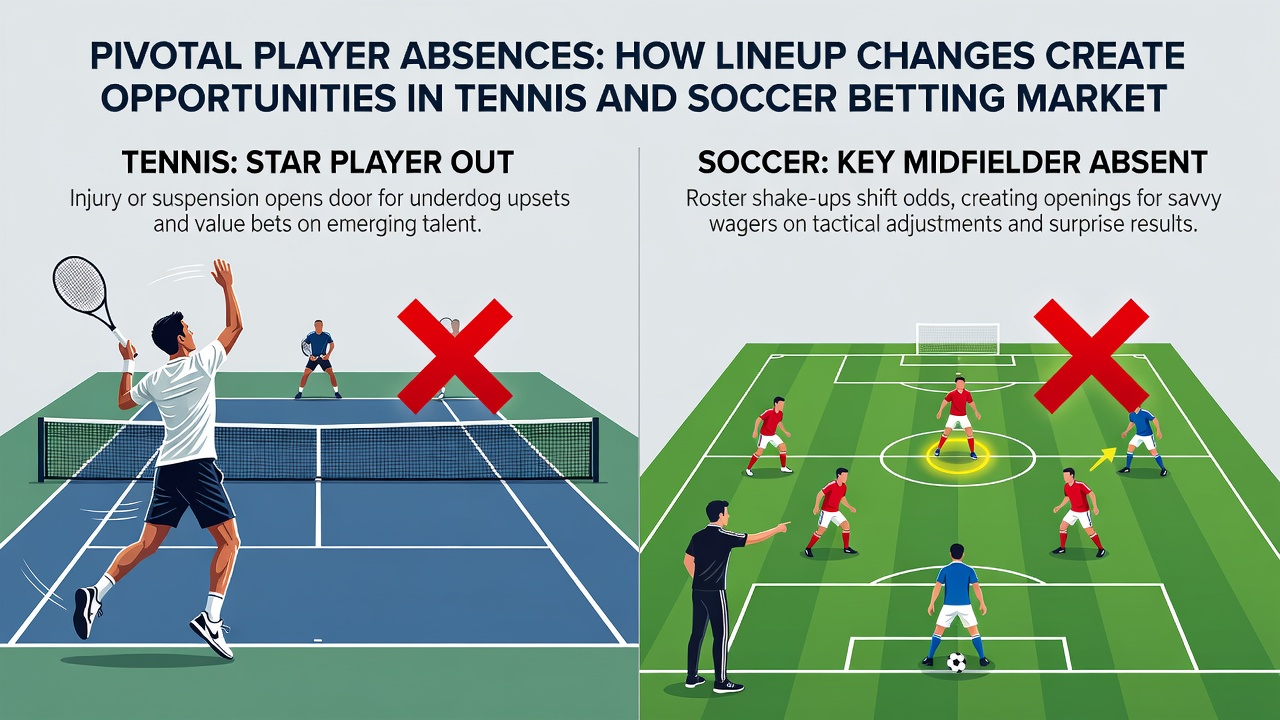
Player absences reshape betting markets in tennis and soccer because odds adjust quickly when key athletes become unavailable, yet markets sometimes lag behind the full impact of those changes. Observers note that both sports see frequent late withdrawals and squad alterations that alter expected outcomes, and data from industry reports show these shifts create measurable value in specific bet types.
Tennis Withdrawals and Market Reactions
Grand Slam events and ATP tournaments release updated player lists daily, which means a single withdrawal can move moneyline odds by several points within hours. Researchers at sports analytics programs have tracked how serve-dependent players leaving a draw opens paths for lower-ranked opponents, while return specialists often face tougher draws when top seeds exit early. Those who've monitored multiple seasons find that in-play markets on set totals respond faster than pre-match totals because bookmakers update live lines based on real-time fatigue signals rather than pre-tournament projections.
Soccer Squad Changes and Goal Markets
Premier League and Champions League fixtures reveal similar patterns when defensive anchors or creative midfielders miss matches through injury or rotation. Figures from European football data providers indicate that teams missing their primary goal scorers see average goal tallies drop by roughly 0.4 per game, which directly influences over-under markets. Yet corners and cards markets sometimes move in the opposite direction because replacement players adopt more aggressive positioning that increases set-piece opportunities. Analysts reviewing October 2026 matches across five major leagues documented how late lineup announcements correlated with sharp money movement on Asian handicap lines, particularly when underdogs gained one or two key starters back from suspension.
Cross-Market Timing and Line Movement
Betting exchanges and traditional bookmakers update tennis player props within minutes of official withdrawal notices, while soccer markets adjust more gradually because team sheets arrive closer to kickoff. Studies from university sports research groups in Australia and Canada show that sharp bettors who wait for final confirmations rather than reacting to initial rumors capture better prices on both sports. Those who study historical odds data find that combined tennis and soccer accumulators built around confirmed absences produce steadier returns when the focus stays on total points or total goals rather than outright winners. The reality is that early market overreactions create pockets where underdogs receive inflated prices, especially in best-of-five tennis sets or knockout soccer ties.
Data Sources and Tracking Methods
Official tournament medical reports and league injury databases supply the raw information that feeds these adjustments. A 2025 report issued by the European Gaming and Betting Association highlighted how real-time data feeds have shortened the window between absence announcements and odds corrections to under fifteen minutes in major markets. Similar tracking conducted by Canadian sports analytics centers confirms that markets handling both tennis and soccer simultaneously display wider initial spreads when multiple high-profile players are ruled out on the same day. Observers tracking these patterns across October 2026 events noted consistent value in live betting segments that open after lineup confirmations rather than before them.
Practical Market Examples
Take a scenario where a top tennis seed withdraws from a quarterfinal due to illness; the opponent’s set-win probability rises sharply, yet some books delay full adjustment until practice reports confirm fitness levels. In soccer, a star striker ruled out hours before kickoff often triggers immediate shifts in both team total goals and player-assist props. Those monitoring multiple seasons report that value appears most reliably in secondary markets such as exact set scores or corner counts because primary markets correct faster. Research from academic groups in the United States and Europe continues to examine how these absence-driven movements differ between pre-match and in-play environments.
Conclusion
Lineup changes in tennis and soccer consistently move betting markets because they alter expected performance metrics that bookmakers must recalibrate. Data from multiple regulatory and research bodies show that bettors who track official announcements and compare them against current odds find measurable edges in specific prop and total markets. As information flows improve across both sports, the windows for these opportunities remain open long enough for prepared observers to act before full corrections occur.